Data Block and Chunk Design in HestiaStore
This document describes the structure and purpose of Block and Chunk objects in the HestiaStore storage engine.
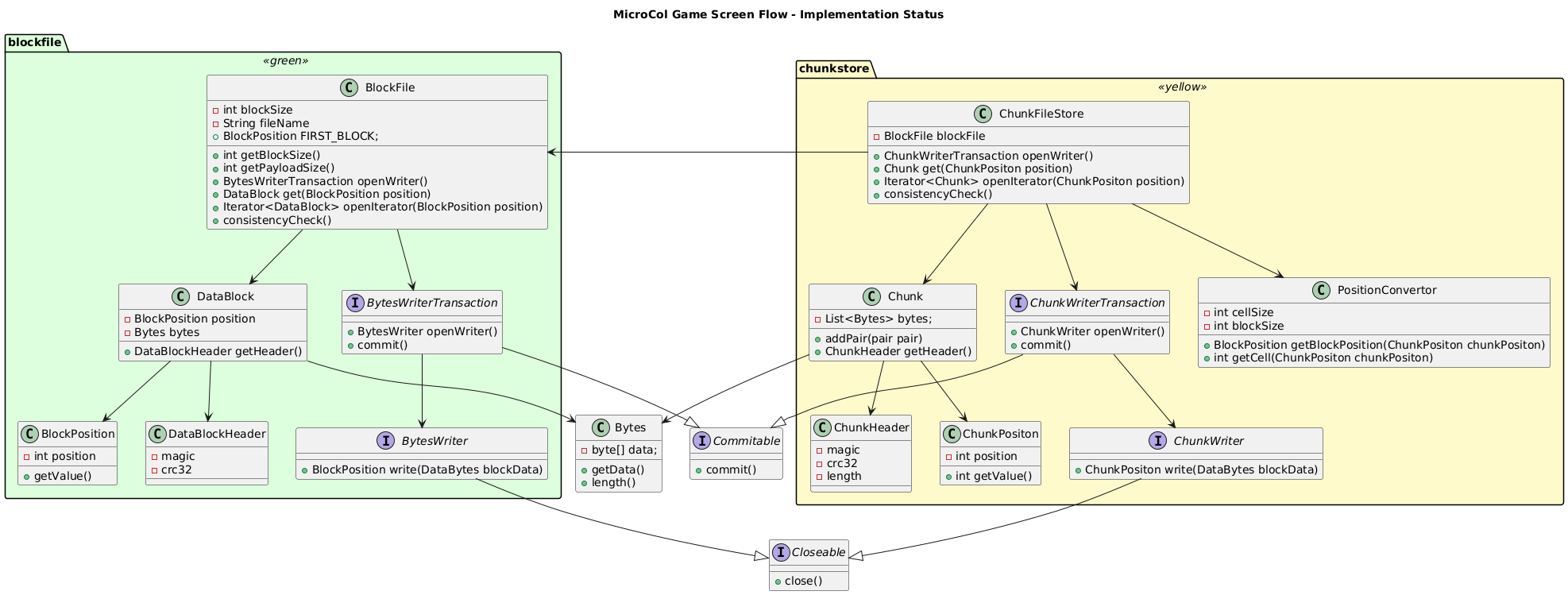
Source: datablock.plantuml
Block
A Block is the lowest-level physical unit of storage. It has a fixed size (typically a multiple of 4KB) and is directly written to disk.
Key Characteristics:
- Fixed Size: Determined by
BlockFile#getBlockSize(). - Header: Each block includes a header with metadata (e.g. magic number, CRC32 checksum, data length).
- Payload: The remaining portion of the block contains user data (
getPayloadSize()returns the usable size).
Block Header Format:
| Offset | Size | Field | Description |
|---|---|---|---|
| 0 | 4 B | magic |
Identifier for block integrity check |
| 4 | 4 B | crc32 |
CRC checksum for payload verification |
| 8 | 4 B | dataLength |
Actual size of data in the block |
| 12+ | N/A | payload |
User data payload |
Blocks are stored and retrieved via the BlockFile abstraction.
Chunk
A Chunk represents a variable-sized, logical data unit stored inside a block. It is used to store optionally compressed sets of key-value entries.
Key Characteristics:
- Variable Size: Can be smaller or span multiple blocks depending on compression.
- Stored Inside Blocks: Uses the
BlockFileto persist data. - Compressible: Designed for efficient compression and decompression.
- Encapsulated Metadata: Chunks also have a header to ensure validity and interpretability.
Chunk Header Format:
| Offset | Size | Field | Description |
|---|---|---|---|
| 0 | 4 B | magic |
Chunk type signature |
| 4 | 4 B | crc32 |
CRC of compressed payload |
| 8 | 4 B | compressedLength |
Length of compressed data |
| 12 | 4 B | uncompressedLength |
Length of original (uncompressed) data |
| 16+ | N/A | payload |
Compressed chunk data |
Chunks are managed through the ChunkFileStore and written using ChunkWriter.
Relationships
BlockFileprovides the persistent storage mechanism.ChunkFileStoremaps chunk positions to blocks and provides higher-level access.- CRC validation is used in both blocks and chunks to ensure data consistency and detect corruption.